Skip to content
Agents at Work

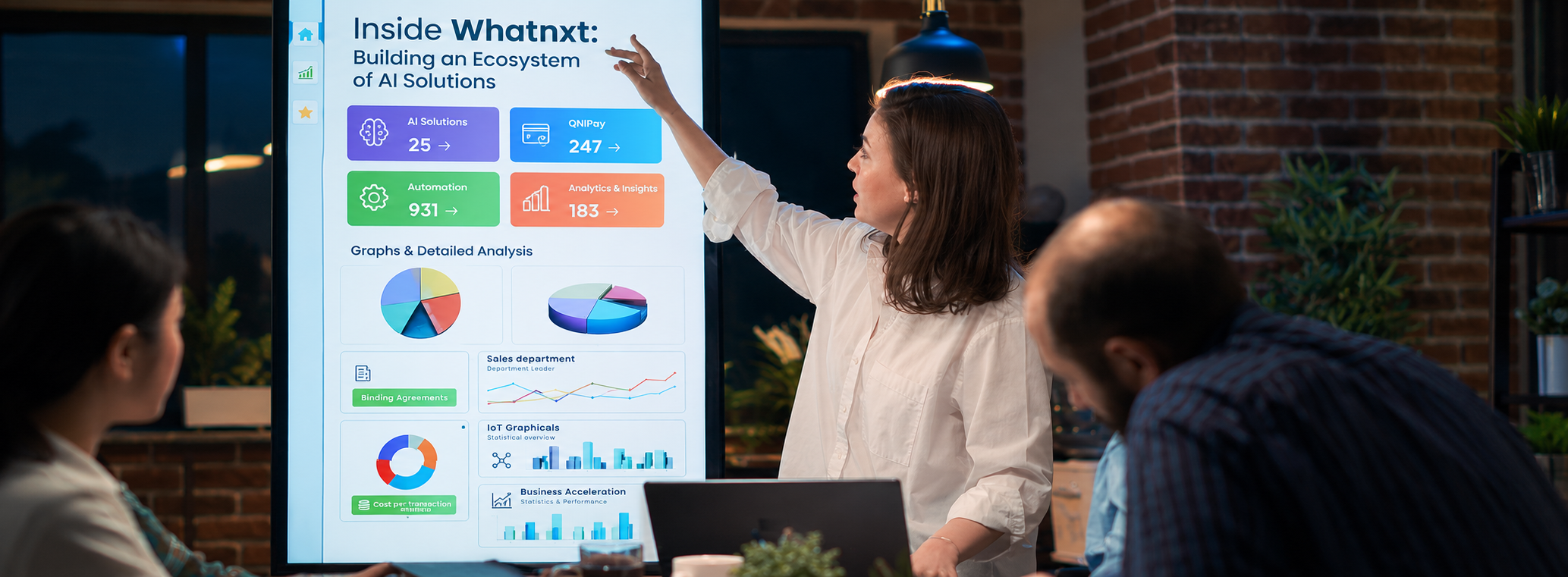
Inside Whatnxt: Building an Ecosystem of AI Solutions 

Most businesses have no shortage of data sitting inside Salesforce. There are customer records, leads, opportunities, contact details, sales activities and years of information gathered by different teams at different points in the customer journey. From the outside, it can look like a complete picture of the business.

Some articles predict that by 2030, AI will be so deeply embedded in everyday work that we may stop thinking of it as a separate technology.

That sounds like a big prediction, but perhaps it is not as far-fetched as it first seems.

We have seen this happen before. The internet went from something people deliberately “used” to something that quietly sits underneath much of what we do. The same happened with cloud software, mobile technology and countless other tools that eventually became part of the background.

AI could follow a similar path.

Instead of opening an AI tool every time we need help, we may simply find AI already sitting inside the systems where the work happens. It could understand information, assist with decisions, handle repetitive tasks and work across different applications without asking people to constantly move between them.

And that brings up a more interesting question about the future of AI: will businesses really need one AI that does everything, or will they need different AI solutions that know how to work together?

The second possibility makes more sense when you look at how businesses operate.
Businesses have never been just one system

A business rarely runs on a single piece of software.

There is payroll. There is finance. There are HR systems, attendance, leave, timesheets, sales, and operations. Each exists because it solves a particular problem, and each has information that matters to another part of the business.

The difficulty has always been getting those pieces to connect in a way that feels natural.

It is one thing for two systems to exchange data. It is another for that connection to make someone’s work easier.

AI adds an interesting layer to this.

Instead of thinking of AI as another application employees need to open, businesses can start thinking about it as something that works within the systems they already depend on.

That shift is important because it changes where the intelligence sits.

The real opportunity is not more AI. It is better-connected AI.

We are going to see plenty of AI products that are good at one thing.

One might help analyse information. Another might help with a workflow. Another might handle a specific business process.

There is nothing wrong with that. In fact, specialised systems often make more sense than trying to build one enormous application that somehow understands every part of a business equally well.

The interesting part is what happens when those specialised solutions can work alongside one another.

Take an HR environment. Payroll has one set of information. Attendance has another. Leave and timesheets add more context. None of these processes exists completely on its own, even if the software handling them does.

When those systems can work together, the information becomes more useful because it has context.

An employee’s absence is not simply an attendance record. Depending on the situation, it can have a connection to leave, timesheets and eventually payroll.

That is where an ecosystem starts becoming more valuable than a collection of disconnected tools.

AI does not have to replace the systems businesses already use

This is one of the more practical parts of the AI conversation.

Most businesses have already spent years building their technology stack. Their systems hold important information, established processes and, most importantly, people who know how to use them.

Throwing all of that away every time an updated technology comes along is neither realistic nor particularly sensible.

AI can instead work with the infrastructure that is already there.

It can become a layer that helps people interact with existing information, understand what is happening across different processes and, where appropriate, take the next step.

The software underneath still matters. The data still matters. The rules and processes still matter.

AI simply gives those systems another way to work together.

This is where the idea of an ecosystem becomes useful

An ecosystem does not mean putting every possible product into one giant platform.

It means giving businesses room to build what they actually need.

A company may start with a standalone HR application because that is enough for the size and complexity of the business today. Six months or two years later, its requirements may look different. It may need payroll, attendance, leave management or timesheets as well.

The technology should be able to grow with that change.

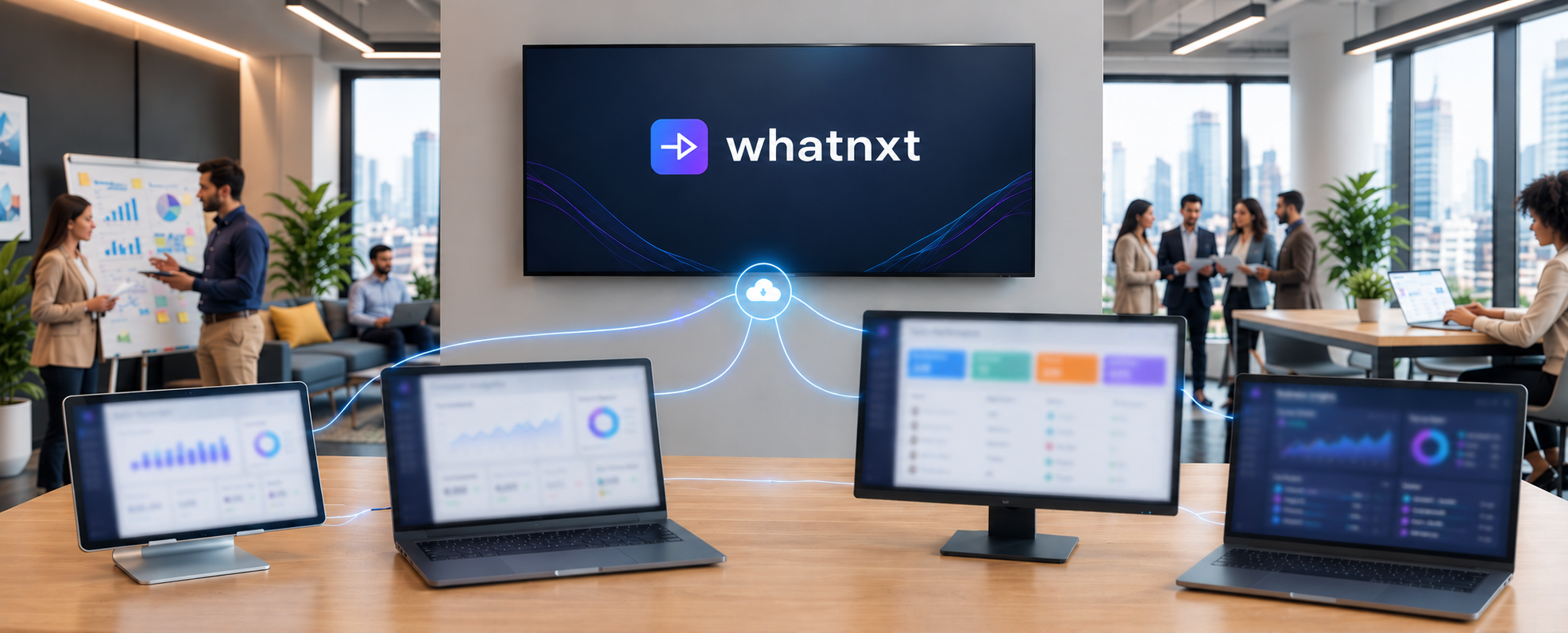
This is the thinking behind Whatnxt.

Whatnxt brings together specialised HR applications that can work independently while also forming part of a broader ecosystem. Businesses can start where they need to and expand their setup as their requirements change, rather than having to rebuild everything each time the business takes another step forward.

And as more of these processes become connected, there is more context for AI to work with.

That is where things get particularly interesting.

The AI of the future may be less visible

Some predictions for 2030 suggest that AI will become increasingly embedded in everyday products and services rather than remaining something people consciously switch on and use.

If that happens, the most successful AI may not always be the AI people notice.

It might be the system that already knows enough context to help with a task. The assistant that can pull together the relevant information without someone searching through three different applications. The agent that handles a routine part of a process and leaves the person to deal with the exception.

Eventually, people may stop saying, “I used AI for this.”

They may simply say, “The system took care of it.”

That is a subtle change, but it could have a much bigger impact on how businesses think about technology.

Whatnxt is building towards

For Whatnxt, the opportunity is not to add AI to HR simply because AI is the technology everyone is talking about.

It is about creating an environment where applications, information and intelligence can work together in a way that reflects how businesses actually function.

The future may not belong to one giant system that tries to do everything.

It may belong to ecosystems of specialised solutions that understand their own jobs, share the right context and give people a more natural way to get work done.

Some predictions about 2030 may turn out to be wrong. That is the nature of predictions.

But the idea of AI becoming less of a destination and more of an underlying part of the way we work feels like a direction worth paying attention to.

Because perhaps the real future of AI is not having more tools to use. It is having fewer things we need to think about using.

  • When AI Stops Answering and Starts Doing: The Rise of AI Agents at Work 
    Agents at Work 6 min

    When AI Stops Answering and Starts Doing: The Rise of AI Agents at Work 

    You could ask it to summarise a document, explain a problem, draft an email, or help you find information, and within seconds you had something to work with. That alone changed the way many people approached everyday tasks.

    6 min
  • Your Salesforce Has Data. But Can You Actually Trust It? 
    Agents at Work 6 min

    Your Salesforce Has Data. But Can You Actually Trust It? 

    Most businesses have no shortage of data sitting inside Salesforce. There are customer records, leads, opportunities, contact details, sales activities and years of information gathered by different teams at different points in the customer journey. From the outside, it can look like a complete picture of the business.

    6 min
  • How AI Agents Work With Existing Business Systems 
    Agents at Work 6 min

    How AI Agents Work With Existing Business Systems 

    We spent years teaching computers how to follow instructions. The interesting part begins when they start understanding what needs to be done next.

    6 min